
Products
Aggregate
Limestone-based crushed stone and chippings, selected by grading for concrete, asphalt and infrastructure fill.
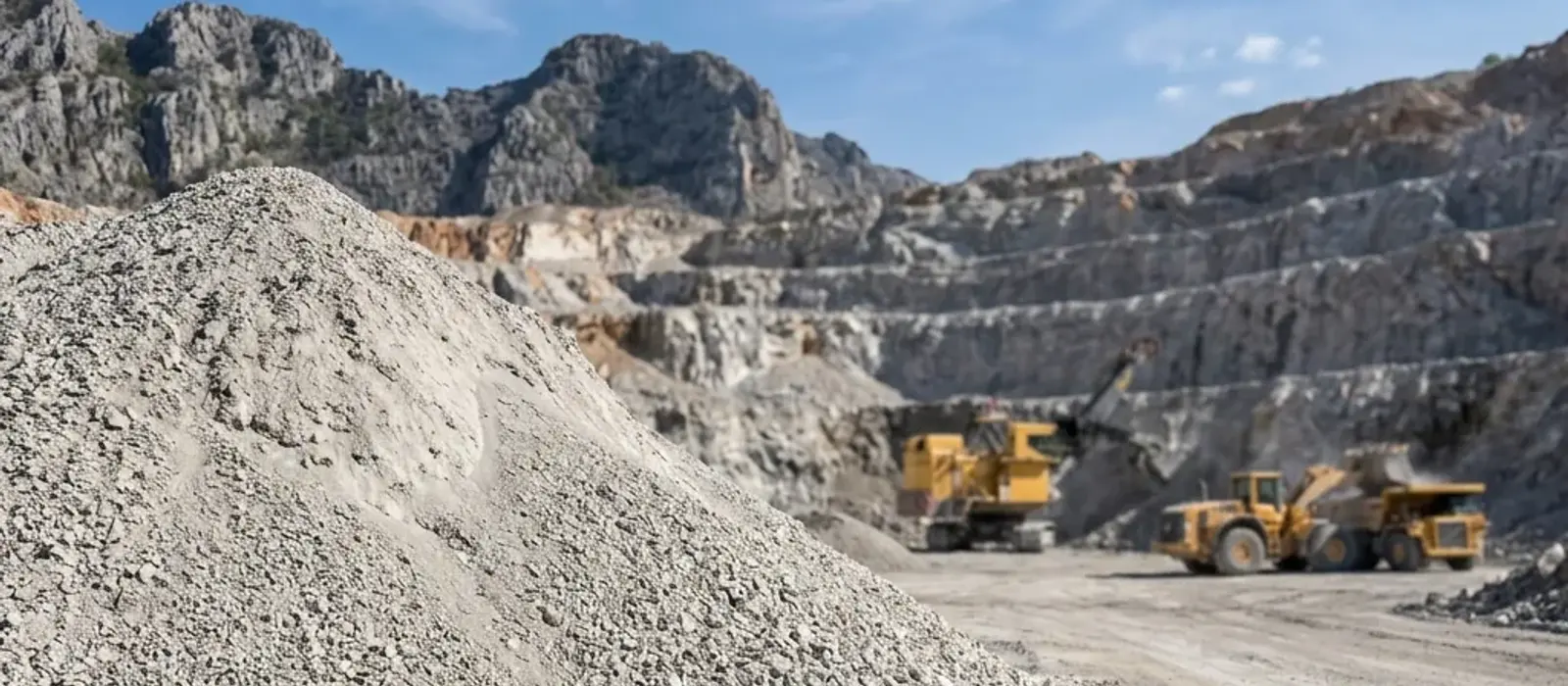
Overview
Aggregate makes up 70–80% of concrete and of a bituminous mix by volume; the behaviour of the finished structure is set more by the aggregate than by the binder. Limestone-based crushed stone and chippings do that job through four properties: grading, resistance to wear, particle shape and pore structure. None of them is “quality” on its own — each one prevents a different failure mode.
The mistake we see most often in the field is selecting aggregate on a single number, usually the Los Angeles value. Yet in an asphalt wearing course it is polishing resistance that decides, in ready-mix concrete production it is water absorption and flakiness, and in a granular base it is the continuity of the grading curve. Aggregate optimised against the wrong parameter looks flawless on paper and degrades early on site.
Our products are produced as d/D size fractions under TS EN 12620 (aggregates for concrete), TS EN 13043 (bituminous mixtures) and TS EN 13242 (unbound and hydraulically bound materials), each fraction stockpiled separately. Below we set out which specification controls which outcome, and where selection should start.
Technical specifications
| Parameter | Value | |
|---|---|---|
| Main constituent | CaCO₃ (calcite) ≥ 95% | EN 932-3 petrographic description |
| Size fractions (d/D) | 0/4 · 4/11 · 11/22 · 22/40 · 40/70 mm | EN 933-1 sieve analysis |
| Los Angeles coefficient (LA) | 20–30 | EN 1097-2 — category LA25 / LA30 |
| Micro-Deval (MDE) | 10–20 | EN 1097-1 — wet attrition |
| Flakiness index (FI) | ≤ 20 | EN 933-3 — FI15 on request |
| Particle density (ρa) | 2.65–2.72 Mg/m³ | EN 1097-6 |
| Water absorption (WA24) | ≤ 1.0% | EN 1097-6 — first indicator of frost resistance |
| Freeze–thaw loss (F) | ≤ 2% | EN 1367-1 — category F2 |
| Magnesium sulfate value (MS) | ≤ 18% | EN 1367-2 — saline exposure |
| Sand equivalent (SE), 0/4 | ≥ 60 | EN 933-8 — cleanliness of fines |
| Polished stone value (PSV) | 40–45 | EN 1097-8 — limiting in wearing courses |
| Loose bulk density | 1.35–1.55 t/m³ | EN 1097-3 — for order conversion |
Main constituent
CaCO₃ (calcite) ≥ 95%
EN 932-3 petrographic description
Size fractions (d/D)
0/4 · 4/11 · 11/22 · 22/40 · 40/70 mm
EN 933-1 sieve analysis
Los Angeles coefficient (LA)
20–30
EN 1097-2 — category LA25 / LA30
Micro-Deval (MDE)
10–20
EN 1097-1 — wet attrition
Flakiness index (FI)
≤ 20
EN 933-3 — FI15 on request
Particle density (ρa)
2.65–2.72 Mg/m³
EN 1097-6
Water absorption (WA24)
≤ 1.0%
EN 1097-6 — first indicator of frost resistance
Freeze–thaw loss (F)
≤ 2%
EN 1367-1 — category F2
Magnesium sulfate value (MS)
≤ 18%
EN 1367-2 — saline exposure
Sand equivalent (SE), 0/4
≥ 60
EN 933-8 — cleanliness of fines
Polished stone value (PSV)
40–45
EN 1097-8 — limiting in wearing courses
Loose bulk density
1.35–1.55 t/m³
EN 1097-3 — for order conversion
Highlights
There is no single “aggregate”: every d/D fraction is produced and stockpiled separately; the final grading curve is built in the mix design, not at the quarry.
Calcitic limestone carries no silica, hence no alkali–silica reaction risk — a direct advantage with high-alkali cements or damp service conditions.
Its basic surface chemistry bonds strongly with bitumen; stripping problems are markedly lower than with siliceous aggregate.
Flakiness is controlled in production through crusher configuration; FI20 is standard, FI15 produced on request.
Low water absorption (WA24 ≤ 1%) and low freeze–thaw loss — for exterior concrete and climates with many freeze cycles.
Every fraction ships with CE marking and a Declaration of Performance under EN 12620 / EN 13043 / EN 13242.
Use
Why grading is the specification that decides everything else
Ordering aggregate is not ordering one material; it is ordering a grading curve. TS EN 12620 and TS EN 13043 define aggregate by d/D size fractions: 0/4, 4/11, 11/22, 22/40. We produce and stockpile those fractions separately; the final curve is built at the plant or on site through the mix proportions. Pouring concrete from a single 0/22 pile means leaving the curve to chance.
Whether the curve should be continuous or gap-graded is decided by the application. In concrete, continuous grading lowers void content and delivers the same workability with less cement paste; every percentage point of void reduction is worth a few kilograms of cement per cubic metre. In bituminous mixes, where the stone skeleton is meant to carry the load directly (SMA), a gap grading is chosen deliberately.
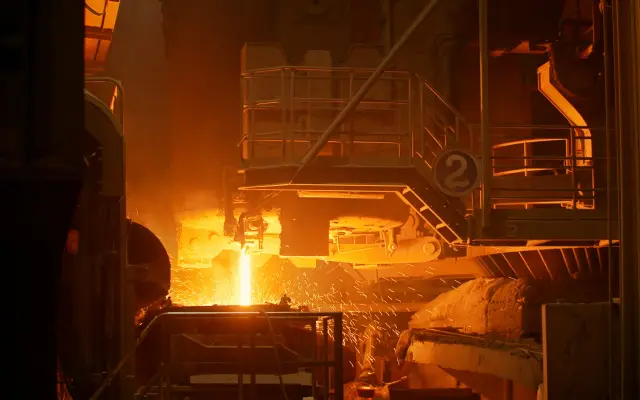
The coarse fractions go elsewhere entirely: 22/40 and above serve drainage, ballast and rock fill, while selected 20–60 mm lump limestone is used as blast-furnace flux. What decides where material from the same quarry ends up is usually not its chemistry but its size fraction and strength category.
What the Los Angeles value tells you — and what it does not
The Los Angeles test (EN 1097-2) tumbles the aggregate with steel balls to measure resistance to impact and abrasion; the result is the percentage passing 1.6 mm afterwards. Limestone aggregate typically falls in the 20–30 range, and category LA30 is more than adequate for most concrete and unbound base applications.
Two things LA does not tell you. First, wet attrition: the Micro-Deval test (EN 1097-1) abrades the sample in water and predicts behaviour in poorly drained base layers far better than LA. Second, polishing: polished stone value (PSV, EN 1097-8) is an entirely separate property with no meaningful correlation to LA.
The practical consequence: paying a premium for LA20 material bound for a granular base is usually money wasted, whereas in an asphalt wearing course a perfect LA will not save material with an inadequate PSV. Rather than raising every category in the specification, it pays to identify which category is actually binding in that layer.
Flakiness and shape index are the field consequence of crusher choice
The flakiness index (FI, EN 933-3) relates particle thickness to width; the shape index (SI, EN 933-4) relates length to thickness. Both numbers are a direct outcome of crusher configuration: a jaw crusher leaves a high proportion of flaky particles, while cone and vertical-shaft impact (VSI) crushers produce cubical grains. FI is therefore a production decision more than a property of the rock.
Flaky particles cause three problems in concrete: water demand rises for the same slump, grains align horizontally and trap water pockets beneath them, and the risk of locking up in a pump line increases. In bituminous mixes flaky grains fracture under the roller; after compaction the grading drifts away from the design and the void content leaves its target band.
That is why we treat the FI category as a production parameter, not a figure reported after the fact. Producing FI15 for a project where FI20 suffices simply burns energy; conversely, an unmet FI15 requirement in a thin wearing course guarantees compaction trouble on site. Knowing the target category at order stage is what prevents surprises later.
Freeze–thaw resistance is a pore-structure question, not a climate question
Freeze–thaw damage occurs when water inside the grain expands on freezing and cracks the pore wall. What decides it is not how many days a year the region drops below zero, but the water absorption and pore size distribution of the aggregate. The first number to look at is therefore the 24-hour water absorption measured to EN 1097-6 (WA24).
The practical threshold is clear: below 1% WA24 most specifications accept the material without further testing. Between 1% and 2% the EN 1367-1 freeze–thaw test is called for. Above 2%, or wherever seawater and de-icing salts are present, the magnesium sulfate test (EN 1367-2, MS category) applies — salt crystallisation pressure is far more demanding than pure water.
The same concrete recipe needs different aggregate in different exposure classes: a roadside barrier and an indoor slab do not deserve the same material. Under de-icing salt, the loss measured to EN 1367-6 can be several times higher than in the pure-water test — exposure class and test selection have to be decided together when the specification is written.
Where limestone aggregate helps concrete and where it needs care
The clearest advantage of calcitic limestone aggregate in concrete is that it contains no silica. Alkali–silica reaction (ASR) starts when reactive silica forms an expansive gel with cement alkalis; calcite does not take part in that reaction. With a high-alkali cement, or where the structure will serve permanently damp, limestone aggregate removes the risk at source.
There are two exceptions. The first is chert or siliceous lenses as impurities within the limestone; petrographic description to EN 932-3 makes them visible. The second is alkali–carbonate reaction (dedolomitisation) in dolomitic facies. Both are screened quarry by quarry through petrography; the CaCO₃ percentage on a certificate does not answer the question on its own.
The other headings to watch in mix design are sulfate and chloride content: to EN 1744-1, acid-soluble sulfate should stay under the AS 0.2 limit and total sulfur under 1%. The quality of the fines governs water demand as well; when the content below 0.063 mm rises, setting and workability drift. Where a controlled filler curve is needed, the mix is topped up separately with ground calcium carbonate.
Strong bond to bitumen, limited resistance to polishing
The limestone surface is basic in character and bonds strongly with the acidic components of bitumen. Stripping, a common failure with siliceous aggregate, is markedly less frequent here; in wet regions that becomes a measurable durability difference. On critical projects, 1–2% by weight of hydrated lime is still added to secure anti-stripping performance, with the side benefit of improved ageing resistance.
The weak point is polishing. PSV for limestone typically stays in the 40–45 band; under traffic the surface burnishes and the wet friction coefficient falls. For that reason limestone aggregate is not used alone in the wearing course of high-speed roads. In binder and bituminous base courses it is both technically and economically the right choice.
The right arrangement is made layer by layer: in road and asphalt applications, a hybrid solution — high-PSV hard aggregate in the wearing course, limestone below — usually gives the lowest total cost. On low-speed service roads, car parks and yard areas limestone can serve in the surface layer too; traffic speed and the wet friction requirement are what decide.
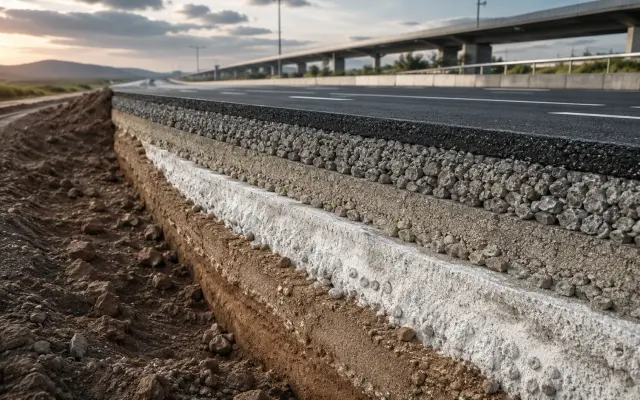
In fill and base layers, the grading curve sets the bearing capacity
In unbound granular layers, bearing capacity comes from interlock between grains, not from the strength of individual particles. That is why continuously graded mixes such as 0/31.5 or 0/63 are used: coarse grains build the skeleton, fines fill the voids and allow compaction. EN 13242 covers these materials under a standard separate from concrete and asphalt aggregates.
Two numbers are checked on site: degree of compaction against modified Proctor (usually ≥ 98%) and the CBR value. Clay in the fines wrecks both directly — once the methylene blue value (MB, EN 933-9) exceeds 10 g/kg the material loses bearing capacity rapidly as soon as it saturates. In 0/D mixes the cleanliness of the fines is therefore more critical than the strength of the coarse fraction.
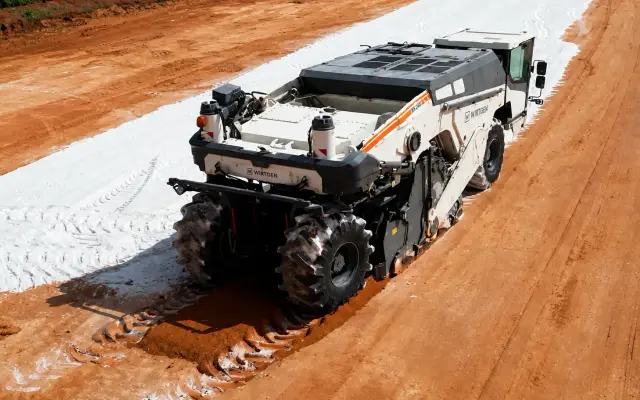
If the subgrade will not carry the load, the answer is not a thicker granular layer but improving the soil. Quicklime drops moisture content quickly and, in clayey soils, builds permanent strength through pozzolanic reaction; the granular layer above can then be laid far thinner. The dosing calculation on the soil improvement and stabilisation side directly sets the thickness of the aggregate layer above — optimising the two line items separately costs more overall.
The gap between the lab report and the batching plant: stockpiles, moisture, segregation
Most of the difference between a test report and what the plant measures comes from stockpile management. In a cone-tipped pile the coarse grains roll to the toe; samples taken from the top and the toe of the same pile give visibly different grading curves. Layered placement and horizontal loader cuts largely prevent this segregation.
The second source is moisture. Crushed sand (0/4) typically carries 4–6% surface moisture in the stockpile; if that water is not weighed in, the water/cement ratio overshoots the target and 28-day strength drops by several MPa. Where the plant moisture probe is not calibrated, a manual oven-drying check is the cheapest insurance. The gap is widest in the first hours after rain.
On the compliance side, aggregate falls under the Construction Products Regulation with CE marking and a Declaration of Performance; because the assessment system is 2+, factory production control is audited by a notified body. Decorative and drainage consignments (landscaping and environmental works) declare different categories; washed and de-dusted fractions must be stated explicitly at the order stage.
Packaging and delivery
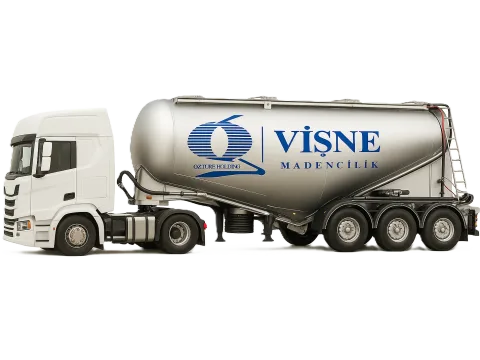
Silo truck — bulk
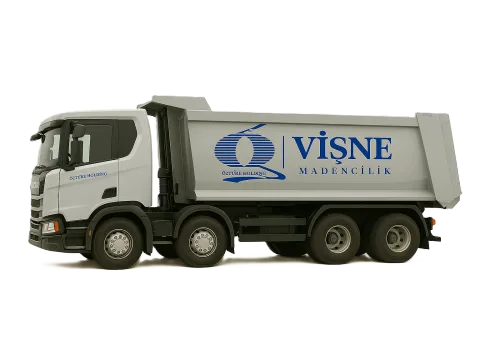
Tipper — bulk
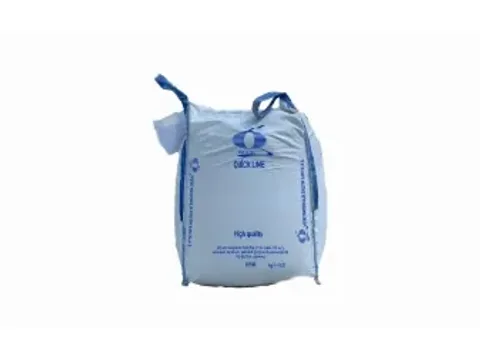
Big bag (1000 kg)

Bag (25 kg)
Bulk — tipper truck or road train (25–30 t)
Bulk — rail wagon and vessel loading (project basis)
1000 kg big bag — decorative and drainage fractions
25 kg bag — landscaping and small-volume use
Washed / de-dusted fractions on request
Where this product is used



Frequently asked questions
Which size fractions should I order for concrete?
For a typical C25/30, 0/4 crushed sand combined with 4/11 and 11/22 chippings is enough. Maximum particle size should not exceed three quarters of the clear bar spacing, one fifth of the narrowest form dimension, or one third of the slab thickness. In heavily reinforced walls and columns, dropping from 22 mm to 11 mm removes placement problems.
Is a lower Los Angeles value always better?
No. LA measures impact abrasion only; in a wet base layer Micro-Deval decides, and on an asphalt surface it is the polished stone value. For a granular base LA30 meets most specifications, and the premium paid for LA20 material does not pay back in that layer.
Can limestone aggregate be used in an asphalt wearing course?
Not on its own for high-speed roads. Limestone PSV typically stays at 40–45; the surface polishes under traffic and wet friction drops. High-PSV aggregate in the wearing course with limestone in the binder and base courses is the usual, economical arrangement. In car parks, yards and low-speed service roads limestone can serve at the surface as well.
Does limestone aggregate carry an alkali–silica reaction risk?
Pure calcitic limestone is safe from ASR because it contains no silica. The risk comes from chert or siliceous impurities within the limestone, or from alkali–carbonate reaction in dolomitic facies. That is why we ask for EN 932-3 petrographic description quarry by quarry; a CaCO₃ percentage on a certificate does not answer the question alone.
What problems does a high flakiness index cause?
In concrete it raises water demand for the same slump, traps water pockets under the grains and increases the risk of blocking a pump line. In asphalt, flaky grains fracture under the roller, the grading drifts from the design and void content leaves the target band. Since the FI category is set by crusher configuration in production, it must be stated at order stage.
Which test and category should I ask for on frost resistance?
Start with water absorption to EN 1097-6; below 1% WA24 most specifications require no further testing. Between 1% and 2%, request the EN 1367-1 freeze–thaw test. Where de-icing salt or seawater is present, ask for the EN 1367-2 magnesium sulfate test with category MS18 or better.
How does aggregate moisture affect the concrete mix?
Crushed sand (0/4) typically carries 4–6% surface moisture in the stockpile. If that water is not deducted from the batch water, the water/cement ratio overshoots and 28-day strength falls by several MPa. The plant moisture probe should be calibrated regularly and verified by manual oven drying, at minimum after rainfall.
Can crushed sand (0/4) fully replace natural sand?
In strength and bond it is usually better; angular grains key into the cement paste more effectively. Water demand is somewhat higher, though, and pumpability suffers if the content below 0.063 mm is not controlled. Sand equivalent (SE ≥ 60) and methylene blue value (MB ≤ 10 g/kg) should be tracked batch by batch.
What documents come with the delivery?
Each fraction ships with CE marking and a Declaration of Performance under TS EN 12620, TS EN 13043 or TS EN 13242, depending on intended use. Because the assessment system is 2+, factory production control is audited by a notified body; current test reports for the batch are supplied on request.
Should I order in tonnes or cubic metres?
Ordering by weight is always safer; the cubic metre figure shifts with loose bulk density and moisture. For limestone crushed stone, loose bulk density is typically 1.35–1.55 t/m³, so one cubic metre of loose material corresponds to roughly 1.4 tonnes. For project-specific conversion and a delivery schedule, contact our technical team.
Sample and dose recommendation for this process
Describe your current usage and target; our technical team will come back with a suitable specification and a starting dose.