
Applications
Mining & Ore Beneficiation
pH adjustment and depressant use in flotation, protective alkalinity in cyanide leaching and acid mine drainage control.
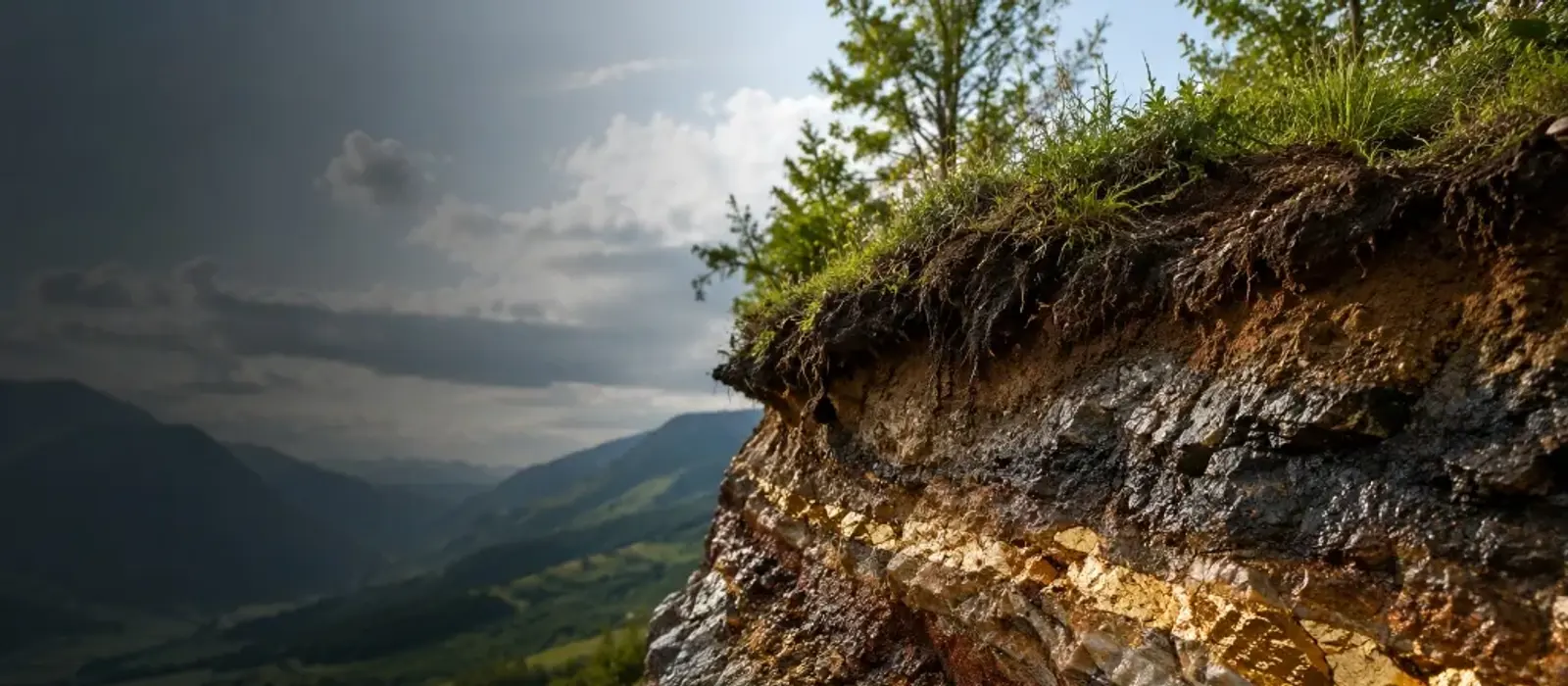
Overview
In a concentrator, lime is not a single reagent but the shared variable of four separate circuits: it sets the surface chemistry in flotation, the safety window of the solution in cyanide leaching, the neutralisation load in acid mine drainage and the settling behaviour in the thickener. Because these circuits are tied together by return water, a dosing decision made in one of them shows up in another the following shift.
The costliest habit in the field is to treat lime as nothing but a pH raiser and consider it interchangeable with sodium-based alkalis. What depresses pyrite is not only OH⁻; the decisive step is Ca²⁺ attaching to the pyrite surface and building a hydrophilic calcium hydroxide/sulphate layer. Reach the same pH with caustic soda and the pulp pH holds on paper, but selectivity drops and pyrite reports to the concentrate.
This page takes the four circuits one at a time: pH control and pyrite depression in flotation, protective alkalinity in cyanide leaching, acid mine drainage (AMD) neutralisation, and the thickener and return-water side. Which form enters the circuit depends on the plant's slaking infrastructure and consumption scale; the technical data for each product sits on the quicklime and hydrated lime pages.
One reagent, four circuits, four different limits
In chalcopyrite–pyrite separation, depressing pyrite has a price. Push the pulp to pH 11.5 and the pyrite surface turns hydrophilic, but in the same environment xanthate adsorption on chalcopyrite also weakens; in porphyry ores carrying molybdenum, Mo recovery sags noticeably. This is exactly what the Barsky relationship describes: depression depends not on an absolute pH but on the ratio between hydroxyl concentration and collector ion concentration. Raise the collector dose and the critical pH moves up with it — lime and collector cannot be tuned independently.
The second price of excess lime is mechanical and usually noticed late. Rising Ca²⁺ and sulphate leave a gypsum crust in rougher launders, pulp lines and screen surfaces; in pulps with a high fines load apparent viscosity increases and bubble dispersion deteriorates. Because thickener overflow carries that calcium back into the circuit, the effect is cumulative: you run at the same kg/t dose while pulp chemistry drifts over months. Controlling hardness and sulphate in return water is really the concentrator's own version of the water and wastewater treatment discipline.
In cyanide leaching the operating window is narrow. The pKa of HCN is 9.21 at 25 °C, so at pH 9.2 half of the free cyanide exists as volatile HCN. Dropping below pH 10.3 therefore means both an occupational hazard and reagent loss. At the other end, above pH 11.5 gold dissolution kinetics slow down: a calcium-derived passivating film forms on the gold surface and dissolved oxygen is used less effectively. The target is not a single value but a narrow band held roughly between 10.3 and 11.0.
Inside that band the measurement itself can mislead. A pH electrode sitting in pulp is quickly coated with lime and calcium salts, its reference junction slows, and a tank that is truly at 10.2 can read 10.8 on the panel. In acid mine drainage the confusion runs deeper: acidity and pH are not the same thing. Two drainage waters both measuring pH 3.5 may carry 200 mg/L and 3,000 mg/L of acidity as CaCO₃ equivalent; the difference is the latent acidity released by hydrolysis of dissolved Fe²⁺, Fe³⁺, Al³⁺ and Mn²⁺. A line dosed on pH alone meets a pH rebound in the settling pond — and since Fe²⁺ will not precipitate at any sensible pH before it is oxidised, skipping the aeration step puts iron straight into the discharge.
Where lime enters each circuit, in which form and to which specification
In flotation most plants add lime to the grinding circuit: milk of lime dosed into the mill feed or cyclone feed works harder than the same quantity added at the conditioner, thanks to long contact time and continuously renewed fresh surface. Milk of lime is typically prepared at 15–20% solids; go below that and you inflate storage and pumping volume, go above it and you accelerate line scaling. Where a slaking unit exists, the feed is crushed CaO at 0–3 or 3–15 mm to suit a continuous slaker; available CaO should be ≥ 90% and t60 reactivity per EN 459-2 should fall between 1 and 4 minutes so it matches slaker residence time.
Because the chemistry of depression runs through Ca²⁺, reagent choice is not merely a cost preference. Calcium combines with oxidised iron species on the pyrite surface to form a hydrophilic layer that blocks xanthate attachment; caustic soda delivers the same pH without building that layer. In practice rougher and scavenger stages are run at different pH: high pH in the rougher for selectivity, one or two steps lower in the scavenger for recovery. The point of staged dosing is to avoid holding the whole circuit at a single high pH.
In cyanide leaching lime enters before cyanide does. pH is brought into the target band at the discharge of the grinding circuit, so that the acid-consuming components of the ore — clay minerals, oxidised sulphides, jarosite — consume lime rather than cyanide. The quantity actually tracked is not pH but free CaO measured by phenolphthalein titration; typical protective alkalinity sits in the 150–400 ppm CaO band. The price of overdosing shows up in the adsorption circuit: calcium carbonate building on activated carbon lowers gold loading capacity and increases acid wash frequency. In cyanide detoxification (the SO₂/air process) lime holds pH in the 8–9 band by taking up the acid released in the reaction.
In acid mine drainage the economic answer is usually two-stage. The first stage takes pH to 4.5–6.0 with natural calcium carbonate: the reagent is cheap, the mainly gypsum sludge dewaters better and most of the free acid is consumed there. The risk of limestone grains being armoured by ferric hydroxide is managed by a fluidised-bed or pulsed reactor design. The second stage lifts pH to 8.5–9.5 with hydrated lime to precipitate Fe and Al hydroxides; where manganese is present the target moves to pH 9.5–10.5 with pre-oxidation, because Mn²⁺ will not precipitate below that.
The design decision that governs sludge volume is the HDS (high density sludge) arrangement: part of the clarifier underflow is contacted with lime and recycled to the reactor, so new precipitate grows on existing crystals. A line producing 2–5% solids in the conventional layout reaches 20–35% solids with HDS. On the sulphate side the limit is gypsum saturation; the practical floor reachable with lime is around 1,200–1,600 mg/L SO₄, and going lower calls for ettringite precipitation at pH 11.5–12.5 with an aluminium source. Lime also shapes floc structure and underflow density in the thickener, while the tailings dam embankment and haul roads bring in the practice of soil improvement and stabilisation. On sites with a smelter, the same reagent captures SO₂ in the flue gas treatment line.
Operating ranges
| Parameter | Value | |
|---|---|---|
| Flotation pulp pH — Cu/pyrite separation | 10.5–12.0 | Read with collector type and dose |
| Flotation pulp pH — Pb / Zn | 8.5–9.5 / 10.5–11.5 | Galena rougher / sphalerite circuit |
| Lime consumption — flotation | 0.3–3.0 kg/t ore | 5–8 kg/t in high-pyrite ores |
| Leach pH — protective alkalinity | 10.3–11.0 | HCN pKa 9.21 (25 °C) |
| Free CaO — leach solution | 150–400 ppm | Phenolphthalein titration |
| Lime consumption — cyanide leach | 0.5–2.5 kg/t | Set by ore acid demand |
| Milk of lime concentration | 15–20% solids | Line scaling limit |
| AMD neutralisation pH — Fe / Al | 8.0–9.0 | Pre-aeration essential for Fe²⁺ |
| AMD neutralisation pH — Mn | 9.5–10.5 | Mn²⁺ needs oxidation first |
| Stoichiometry — acidity demand | 0.74 kg Ca(OH)₂ / kg acidity | As CaCO₃ eq.; 1.1–1.4× in practice |
| HDS sludge recycle ratio | 20:1–40:1 | Underflow 20–35% solids |
| Sulphate — gypsum saturation floor | 1,200–1,600 mg/L | Ettringite process to go lower |
| Slaking water / CaO ratio | 3:1–5:1 by weight | 1,140 kJ/kg CaO exothermic |
| Feed size — slaker | 0–3 / 3–15 mm | EN 459-1, CL 90-Q |
Flotation pulp pH — Cu/pyrite separation
10.5–12.0
Read with collector type and dose
Flotation pulp pH — Pb / Zn
8.5–9.5 / 10.5–11.5
Galena rougher / sphalerite circuit
Lime consumption — flotation
0.3–3.0 kg/t ore
5–8 kg/t in high-pyrite ores
Leach pH — protective alkalinity
10.3–11.0
HCN pKa 9.21 (25 °C)
Free CaO — leach solution
150–400 ppm
Phenolphthalein titration
Lime consumption — cyanide leach
0.5–2.5 kg/t
Set by ore acid demand
Milk of lime concentration
15–20% solids
Line scaling limit
AMD neutralisation pH — Fe / Al
8.0–9.0
Pre-aeration essential for Fe²⁺
AMD neutralisation pH — Mn
9.5–10.5
Mn²⁺ needs oxidation first
Stoichiometry — acidity demand
0.74 kg Ca(OH)₂ / kg acidity
As CaCO₃ eq.; 1.1–1.4× in practice
HDS sludge recycle ratio
20:1–40:1
Underflow 20–35% solids
Sulphate — gypsum saturation floor
1,200–1,600 mg/L
Ettringite process to go lower
Slaking water / CaO ratio
3:1–5:1 by weight
1,140 kJ/kg CaO exothermic
Feed size — slaker
0–3 / 3–15 mm
EN 459-1, CL 90-Q
Application steps
- 01
Characterising ore and water chemistry
The work starts not with a lime dose but with measuring how much acid the ore will generate and how much it will consume. Acid–base accounting (ABA) establishes acid generation potential and neutralisation potential; an NP/AP ratio above 3 is generally taken as non-acid-forming, below 1 as acid-forming. The uncertain band between them requires net acid generation (NAG) testing and kinetic cell trials.
On the same samples, sulphur species are separated: pyritic sulphur is not the same as sulphate sulphur, and a calculation based on total sulphur overstates acid potential. For the flotation side, pyrite/chalcopyrite liberation size and clay content are determined; for the leach side, the ore's cyanide and lime demand are measured in the laboratory.
On the drainage and process water side, pH alone is not sufficient data. Acidity, alkalinity, the Fe²⁺/Fe³⁺ split, Al, Mn, sulphate and hardness are requested together; without seasonal sampling neither the design flow nor the acidity load can be chosen correctly.
- 02
Lime demand curve and flotation testwork
The lime demand curve shows how pH responds to increasing dose and exposes the buffering regions. In AMD waters this curve is almost never straight: a plateau appears where Fe and Al hydrolysis completes, and a second inflection where Mn starts to precipitate. The design dose is set not on the plateau but slightly above the precipitation region of the target metal.
On the flotation side you do not fix the lime dose and read pH; instead kinetic tests are run at several pH levels and a recovery–grade curve is produced at each. The aim is not the highest recovery but the lowest pH that keeps concentrate sulphur and iron grades below the smelter specification.
Testwork must use the plant's actual return water, not tap water. Return water carrying calcium, sulphate and residual reagent gives a different optimum pH on the same ore than fresh water does, and that gap turns into a surprise during commissioning.
- 03
Slaking unit and milk of lime preparation
At high consumption, slaking quicklime on site clearly lowers the cost per unit of active substance. The slaker is sized for a water/CaO ratio of 3:1 to 5:1 by weight with controlled outlet temperature; since the reaction releases roughly 1,140 kJ per kg of CaO, vapour venting and cooling water belong in the calculation.
Grit separation is the source of most breakdowns. Unslaked cores and impurities that are not removed abrade dosing pumps and control valves and destroy dosing repeatability. Grit rising above the expected proportion usually points to a batch with fallen reactivity or one that was overburnt.
The density of the prepared slurry is measured continuously and dosing volume corrected against it. Without density measurement the operator believes the same volume is being dosed while the amount of active substance varies batch to batch; much of the unexplained scatter on a lime consumption chart originates here.
- 04
Dosing points and pH control in the flotation circuit
The dosing point matters as much as the dose. Lime added in the grinding circuit achieves the same depression with less reagent thanks to long contact time and freshly fractured surface; lime added at the conditioner suits fast pH correction but does not stop pH falling along the circuit. Most plants use both: the base load in grinding, the trim at the conditioner.
Running rougher and scavenger at the same pH is a common habit and usually costs recovery in the scavenger. High pH is chosen in the rougher for selectivity and one or two steps lower in the scavenger to catch escaping valuable minerals; pH is raised again in the cleaner stages.
A pH electrode in pulp is a maintenance item. Without a self-cleaning assembly, regular calibration and cross-checks against laboratory samples, the control loop chases a wrong number. Electrode drift is one of the most frequent reasons lime consumption creeps up unnoticed.
- 05
Protective alkalinity in the leach and adsorption circuit
Lime is dosed in the grinding circuit and pH brought into the target band before cyanide is added. Reverse the order — cyanide first, lime second — and the acid-consuming components of the ore consume free cyanide, creating a risk of HCN evolution. That sequence belongs in the written commissioning procedure.
Monitoring runs as a tank-by-tank pH profile together with free CaO titration. A falling pH from the first leach tank to the last is normal; the size of the fall says more about the ore's acid demand than the absolute pH does. When free CaO sags below 150 ppm the band has lost its protection.
The cost of overdosing becomes visible in the adsorption circuit: calcium carbonate building on the activated carbon surface lowers gold loading capacity and increases acid wash frequency. A gradual decline in carbon performance is often caused not by the carbon itself but by alkalinity held higher than necessary in the leach.
- 06
The AMD line: aeration and two-stage neutralisation
The line begins with aeration. Fe²⁺ does not precipitate at any sensible pH until it is oxidised to Fe³⁺; skip aeration and either iron appears in the discharge or you have to push pH above 10.5 to precipitate it, which raises both lime consumption and sludge volume. Aeration also strips CO₂ and lowers lime demand.
The first stage raises pH to 4.5–6.0 with calcium carbonate. This stage covers most of the free acid with a cheap reagent and produces a mainly gypsum sludge that dewaters well. To prevent limestone grains being armoured with ferric hydroxide, a fluidised-bed or pulsed contact regime is chosen; a fixed-bed column blinds in a few weeks on the same water.
The second stage lifts pH to 8.5–9.5 with hydrated lime and Fe and Al precipitate as hydroxides. Where manganese is present the target moves to 9.5–10.5. With sludge recycle (HDS) in service, underflow solids reach 20–35% — the single design decision that cuts sludge disposal volume several-fold. Before discharge, pH is trimmed back to the permit limit with carbon dioxide or staged blending.
- 07
Thickener, dewatering and tailings storage
In the thickener, lime changes surface charge and floc structure and therefore directly affects flocculant performance. The same anionic polyacrylamide dose gives a different settling rate at pH 8 than at pH 11; optimising flocculant dose independently of lime dose is wasted effort.
Underflow solids determine how much water goes to the tailings facility and therefore the load the embankment has to carry. On sites moving to filtered or paste deposition, lime also serves as part of the binder system, since activating ground granulated blast furnace slag requires an alkaline environment.
Supernatant chemistry is tracked separately because it returns to the circuit. Calcium and sulphate accumulation governs both flotation selectivity and in-pipe scaling, while residual cyanide and thiocyanate are followed for discharge and site safety. For the embankment, drainage layers and haul roads, the same grading logic applies as in road infrastructure applications.
- 08
Monitoring, records and seasonal retuning
Lime dosing is not a set-and-forget parameter. When the ore zone changes, pyrite content and acid demand change with it; in the wet season AMD flow rises while acidity concentration dilutes, and in the dry season the reverse happens. The control strategy should be built on flow × acidity load, not flow alone.
On the record side, at least three series are kept together: reagent consumption (kg/t and kg/day), circuit pH values and product quality (concentrate grade, leach recovery, discharge metals). Read separately these series say nothing; overlaid, they usually show at a glance why lime consumption rose.
On cyanide sites, alkalinity records are a direct subject of international cyanide management code audits; on AMD lines, permit parameters and sludge disposal records are requested. For a dosing study specific to your ore and water, you can reach us with your analyses through the contact page.
Products used in this field
Frequently asked questions
Can I use caustic soda instead of lime to depress pyrite?
You can use it to raise pH, but you will not get the same depression. What matters in pyrite depression is Ca²⁺ building a hydrophilic layer on the surface, and sodium does not build that layer. Circuits switched to caustic soda typically show higher concentrate sulphur grades at the same pH.
Where should I dose lime in flotation — the mill or the conditioner?
Putting the base load in the grinding circuit is more efficient: contact time is long and the mineral surface is fresh, so the same depression is achieved with less lime. Conditioner dosing suits fast correction. Most plants use both and trim at the conditioner.
Why should I not push leach pH above 11?
Above pH 11.5 gold dissolution kinetics slow down; a calcium-derived passivating film forms on the gold surface and oxygen is used less effectively. Excess calcium also fouls activated carbon. The practical target is the 10.3–11.0 band, which balances safety against kinetics.
Should I monitor protective alkalinity by pH or by titration?
Use both, but base decisions on titration. A pH electrode in pulp becomes coated with lime and calcium salts and drifts, whereas free CaO by phenolphthalein titration gives the buffer reserve directly. The typical target is 150–400 ppm CaO.
For AMD neutralisation, limestone or hydrated lime?
Usually both. Limestone is cheap, covers most of the free acid up to pH 6 and produces a better-dewatering sludge, but it cannot lift pH above about 6. Hydrated lime is needed in a second stage for Fe, Al and especially Mn.
How do I prevent armouring of limestone grains?
By avoiding a fixed-bed contact regime. In fluidised-bed or pulsed reactors the grains abrade against each other and the ferric hydroxide layer building on the surface is continuously worn away. Reducing grain size increases surface area but does not by itself solve armouring.
Can I get sulphate below 1,500 mg/L with lime?
No. The floor reachable with lime is set by gypsum saturation and sits in practice around 1,200–1,600 mg/L SO₄. Going lower requires an additional stage such as ettringite precipitation at pH 11.5–12.5 with an aluminium source, membranes or biological sulphate reduction.
Why does the HDS process densify sludge so much?
When part of the clarifier underflow is contacted with lime and returned to the reactor, new precipitate grows on existing crystals, producing a denser and better-dewatering structure instead of gelatinous fresh hydroxide. Solids rise from 2–5% in the conventional layout to 20–35%.
Why has my lime consumption risen on the same ore?
Three causes are common: chemical accumulation in return water, a drifted pH electrode and a lime batch with fallen reactivity. All three look identical in the dosing record. To separate them, first cross-check the electrode against a laboratory sample, then look at the batch's available CaO and t60.
How does calcium build-up in return water affect flotation?
As Ca²⁺ and sulphate accumulate, pulp chemistry drifts: depression behaviour changes, flocculant performance falls and gypsum scale forms in the lines. Because the effect is cumulative, results change over months at an unchanged kg/t dose — which is why return water hardness and sulphate must be monitored regularly.
Sample and dose recommendation for this process
Describe your current usage and target; our technical team will come back with a suitable specification and a starting dose.